YouTube's Growth Director Just Debunked 6 Algorithm Myths
YouTube's growth director says the algorithm isn't pushing your videos. It's pulling viewers. Here's what that actually changes for creators
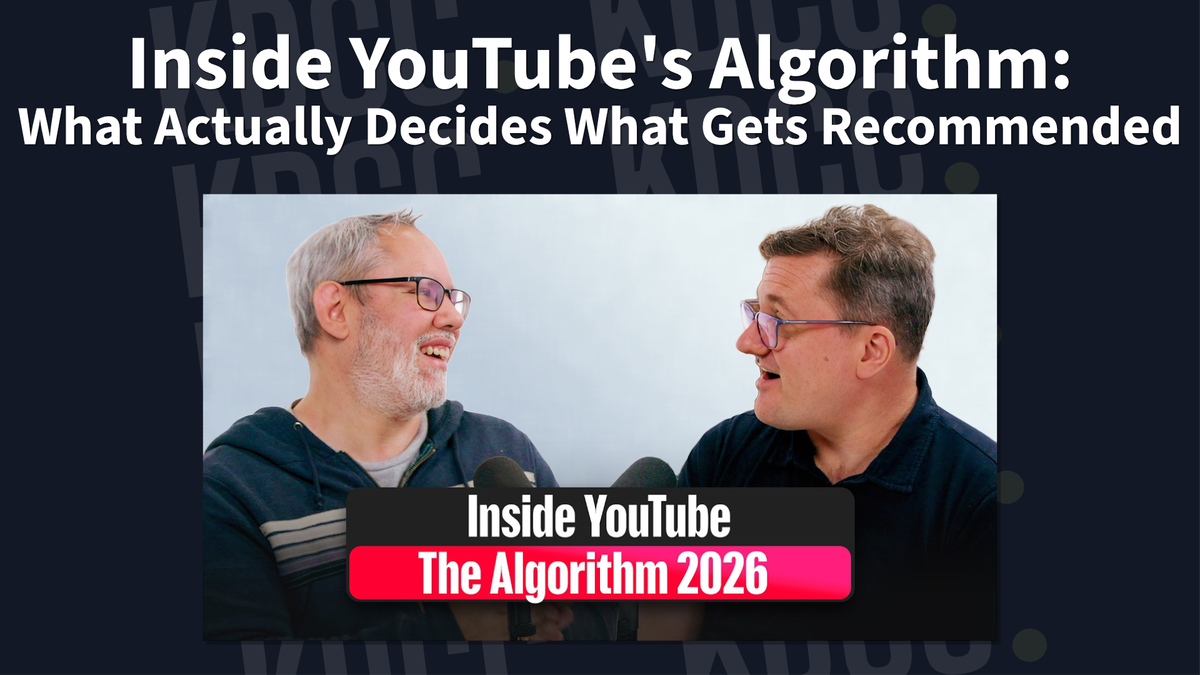
YouTube's doesn't push content to people, they pull people to the content.
This is something that we've been telling people for a while now, but the idea of "YouTube isn't pushing out my content" or "the algorithm is screwing with me" is still prevalent.
That's why it's always good for YouTube to speak on this topic to help dispel this belief and the language usage. We highly recommend you watch the full 39 minute video from Creator Insider, but here are the highlights that we took from the video.
Todd Beaupré, YouTube's Senior Director of Growth and Discovery, puts it plainly: "While we do push notifications to people's devices if they're opted in, most of the recommendations are pulled for each viewer."
When a viewer opens the YouTube app or turns on YouTube on their TV, that's when the recommendation system is activated for that viewer.
The decisions are made at that moment and YouTube considers the viewer's watch history along with the current context such as what time it is and what device they're watching from.
You might've even noticed yourself how YouTube tends to give you different recommendations depending on whether you're on your phone, desktop, or TV.
Another thing YouTube does is rank the recommended videos for each viewers, so it can differ between viewers.
"[YouTube]'s not really looking at a video and saying let's go figure out who the audience is going to be. It's looking at each viewer and saying what are the best videos and posts and other formats for this viewer at this moment."
— Todd Beaupré, Senior Director of Growth and Discovery
The first hour of your video doesn't determine everything
We've seen this with some of our members in Group Coaching, where they say the video's a dud because it didn't get any views within the first hour. Some might even consider deleting it in case the poor performance might affect their channel.
But as previously mentioned, videos on YouTube are ranked based on each individual viewer. The more history a viewer has with your channel and topic, the more it'll likely to rank higher for those viewers than those who've never watched your channel before.
There's the thought that YouTube will test your video with your core audience before branching out to viewers outside of your circle.
"But when we look at the data, it's not like, oh, you're only getting core users who've watched your channel, you know, every upload right at the beginning. We see diverse audiences that actually end up getting your video visible, maybe because they're scrolling farther. And so, it's not just your core audience in the first hour or even minutes."
— Todd Beaupré, Senior Director of Growth and Discovery
Todd has looked at many channels and he sees that the majority of the channel's audience can be non-subscribers, even in the first hour of the video. It can be a mix of both.
One thing you should remember is that it doesn't only matter who saw your video within the first hour. YouTube isn't looking at the overall opinion of everybody in that hour as one performance metric. It's learning the audience, and it'll use that data for each viewer.
Certain videos can take weeks or even months to hit its stride. However, this doesn't mean you should cross your fingers and hope that the right audience will find your video. You should still look at your impressions, CTR, and watch time to pinpoint any issues.
There is no magic metric. No one magic number
What matters the most to YouTube is that they're delivering a valuable experience that makes viewers want to come back to YouTube. YouTube wants you to feel like they've delivered the most value that sustains over years.
Due to that, YouTube has to look at many different metrics because no metric on its own is a good indicator of value.
You could look at impressions and CTR, and that'll only show you how attractive the thumbnail and idea were. But if the video goes viral, the impressions go up while CTR goes down.
Watch-time is another metric creators are heavily invested in, but having high watch hours doesn't always mean viewers leave your video satisfied. YouTube doesn't want to assume that all time is valuable, which is why they survey viewers to understand what was satisfying to them.
YouTube looks at likes and dislikes, they look at comments. Todd Beaupre reminds us that none of these metrics are good by themselves.
"We're careful not to have the system make a decision based on any one factor. Like when we started looking at integrating comments, it was very important for us that we didn't penalize people that for whatever reasons they choose not to have comments on. We don't want that system to understand that this means people aren't just engaging with this content."
— Todd Beaupré, Senior Director of Growth and Discovery
It's understandable for us creators to want a concrete metric that determines everything, but YouTube's system is complex because it has to serve millions of people every day... and those millions of people all have varying taste.
Andrew Kan deep dived into the new era of YouTube in the KDCC blog, and how watch time is out and satisfaction is in.
 Andrew Kan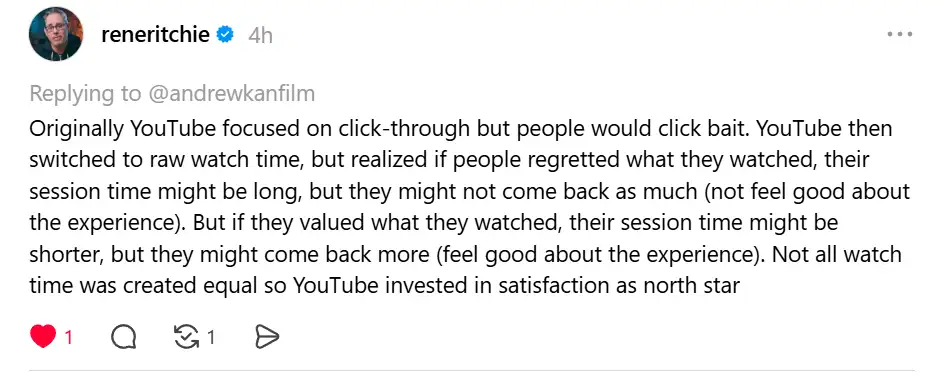
Those random suggested videos aren't a bug...
If you've ever gone into Advanced mode in YouTube Studio (and if you haven't, you should) to check videos suggesting your video and saw a wide range of topics, you might be a little confused. You might even assume it's a bug or that YouTube doesn't understand your audience.
According to Todd, a video can appear next to another video even if it's not related because it's based on the viewer. What you see in your analytics is the personalized result based on the viewer's interest.
People don't use the subscription feed to catch up on their subscriptions as much anymore. Their interests range widely and it's common for them to change the channel.
"[The video]'s not related because it's the same topic, but they're connected because there was a viewer that watch both videos. And we want to reach that viewer for you, not just when they happen to be on the same topic. And you end up getting a lot more views that way. So I wouldn't worry when you see that successful cross-topic traffic happening for you."
— Todd Beaupré, Senior Director of Growth and Discovery
I'll be honest, I've once thought that suggestions were busted because of how it kept showing unrelated videos. Now that I understand these are based on what people are watching, it helps me figure out who my viewers are and their particular interests.
New channels aren't starting from zero
If you're just starting out, you might think, "I have zero viewers with any history to my channel. Does that mean the algorithm won't pull anyone to my video?"
"That's why we have parts of the system that don't depend on an individual viewer's history with that channel. We're going to be using other signals that we have about the fit between that content and that viewer that aren't dependent on that viewer having history with the channel."
— Todd Beaupré, Senior Director of Growth and Discovery
YouTube will instead look at the viewer's topical preferences and what what the video is about to try to match when there is no channel history.
There have been people saying that YouTube doesn't care about new creators, and that's not true. YouTube actually tracks channels that does make it. They've also made the effort to introduce more newer channels to viewers on the homepage.
 Ike
Ike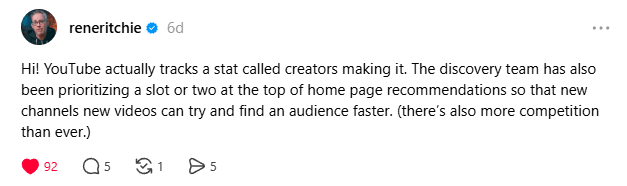
Again, we highly recommend you watch the full video from Creator Insider to learn about YouTube's algorithm in 2026. And if there's only one thing you take away from this email, it should be this:
Focus on your audience, not the algorithm.
The system is trying to do the same thing you are, which is to connect the right video with the right person. Fighting it with superstition doesn't help. Understanding how it actually works does.
Get monthly channel reviews and weekly live group coaching from Andrew Kan and Ike Do. First 7 days are free (credit card required), cancel anytime.