Building a Creator-Owned Platform: Lessons From Uscreen x The Women Creators
When you look at the top 20 of YouTube channels, only 2 of them are women. There is a huge gap that's widening in the creator economy, and that's why The Women Creators sees this as an opportunity to close that gap.

According to Jenny Stojkovic from The Women Creators, although more than 80% of creators are women, the top monetized channels are dominated by men.
When you look at the top 20 of YouTube channels, only 2 of them are women. There is a huge gap that's widening in the creator economy, and that's why The Women Creators sees this as an opportunity to close that gap.
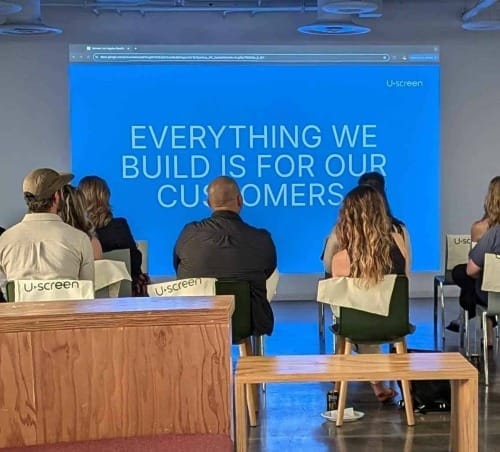
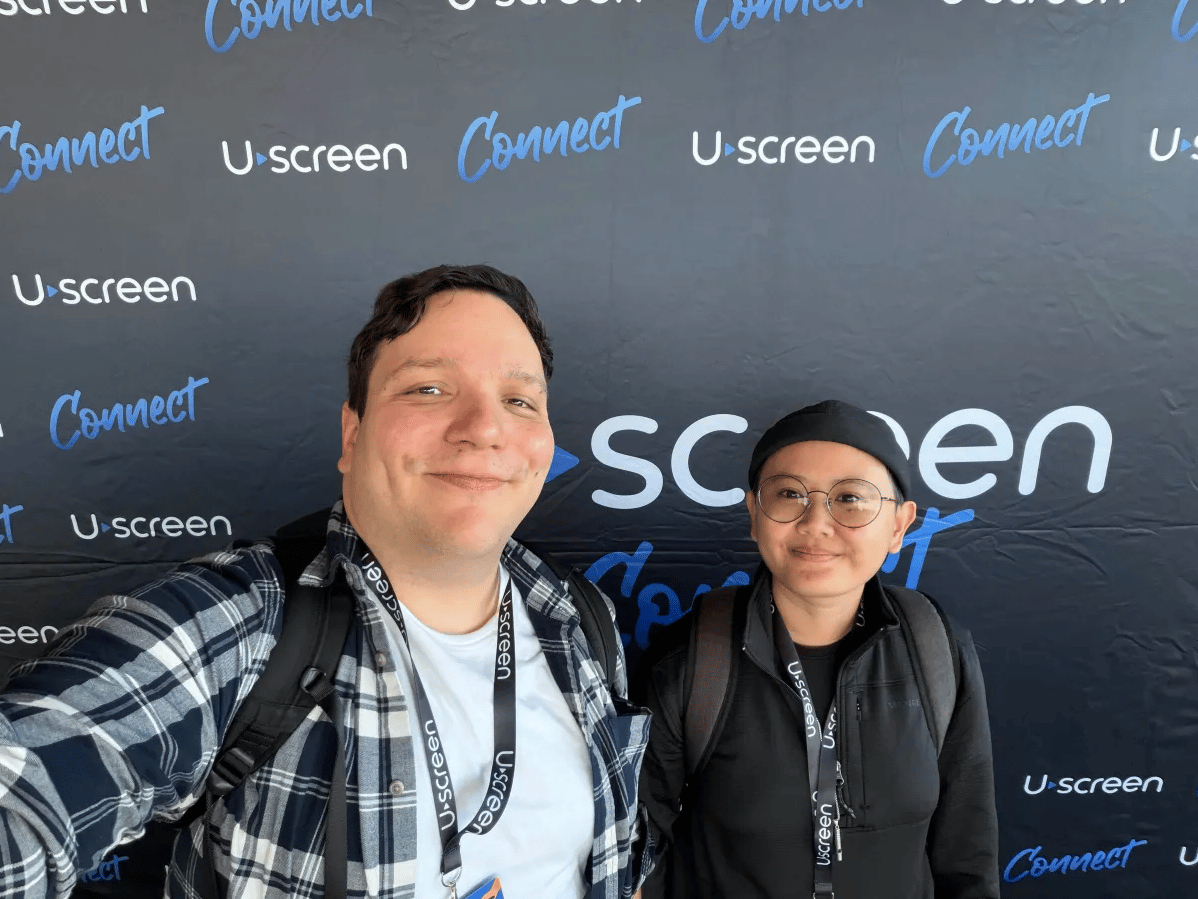
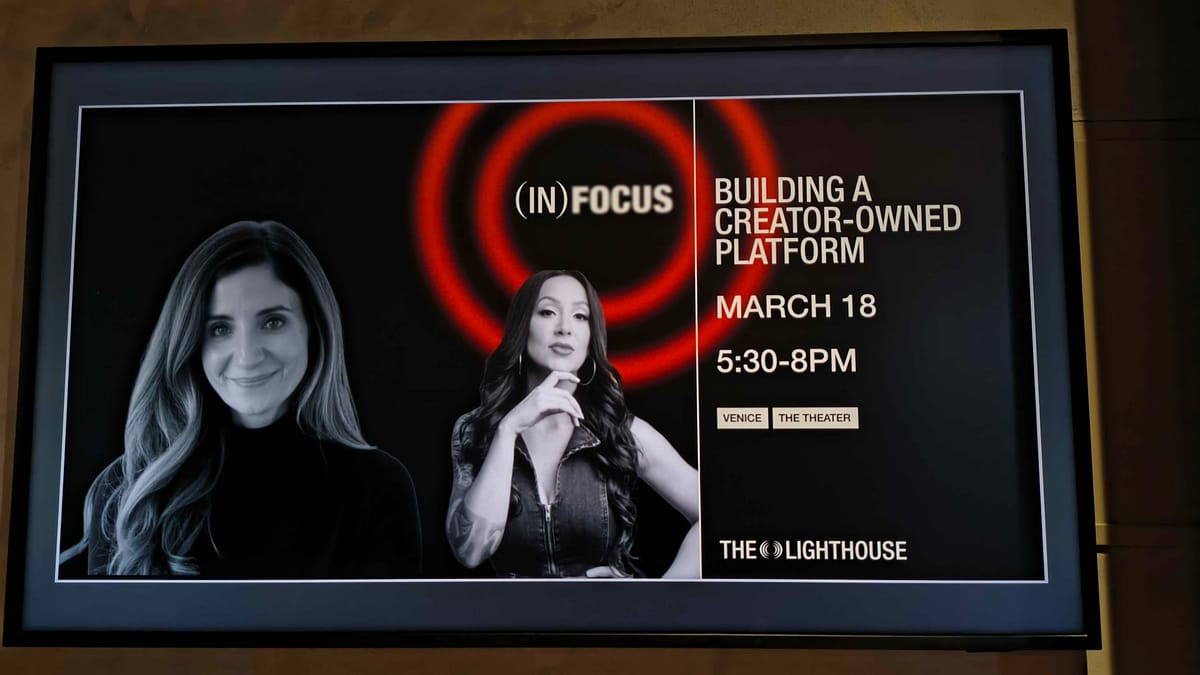
We got to hear from Allison Yazdian, CEO of Uscreen, and Jenny Stojkovic, the creator of The Women Creators at The Light House in Venice. Big thanks to Allison and Uscreen for the invite!
Here's what we learned.
You don't need a big following.
Back when we attended VidCon during the TikTok takeover, we saw a lot of big TikTok creators with some of them having meet and greets.
That was when we saw something rather interesting and sad. There was this TikTok creator with millions of followers with a line of... exactly zero people. Nobody came to their meet and greet.
Meanwhile, a YouTube creator with 10k subscribers had a line of dedicated followers.
This resonated to Andrew and I, and it matched with what Allison and Jenny said about how follower count is becoming less relevant than engagement and niche audience quality.
Creators can successfully monetize with 10k - 40k of highly engaged followers.
Here's an example calculation: 20k followers with 2% conversion rate = 400 subscribers at $25/month = $120k annual revenue.
To get your followers engaged, you should build a direct relationships with audiences as early as possible through email lists and newsletter.
People are still very keen on giving away their email. They still open to check their email everyday.
If you're able to connect with your audience through their inbox, AND be able to get them to want to click... this can build a long-lasting relationship.
Authenticity is more important than ever in the world of AI.
We've all seen it. The AI-ification of social media as companies (and some individuals) use AI in their videos or use "AI influencer" as a way to sell their product.
How many times have you seen videos or shorts that you enjoyed, only to find out it's AI and immediately ruining your enjoyment of it?
Or how many times have you scroll through videos, immediately recognizing that it's AI, and not give it a second thought.
Viewers are wanting more authenticity from real people, and they want it more than ever with the influx of AI.
When it comes to authenticity, sometimes it can be cringe.
And that's okay.
Everybody wants to be the perfect version of themselves, or simply, not be themselves on the internet. I understand that because that's how I was when I first started on YouTube.
But the quality your viewers connect with the most is your true, authentic self. There's a cringe factor to everyone, even if they don't want to admit it.
Here's what Allison said about this: "Actually, the ones I've written that are most cringy like that's actually where I get the DMs and I get the messages [...] But I will say perception is reality [...] it has opened so many doors for me and for Uscreen that I'll take the cringe every day."
Build an audience you actually own.
How would you feel if your 100k YouTube channel got taken down tomorrow without any means to recover it? All that work, gone.
That's the risk of building only on social media. These platforms are "rented land." You don't control your reach, and there's no guarantee your content even gets seen by your own followers.
That's why building a direct relationship with your audience matters. If something disappears overnight, you've still got a line to the people who care.
But it goes deeper than backup plans.
Building a real community means actually showing up for your people—helping them connect, feel seen, and belong.
True community exists when members talk to each other even when the creator isn't present.
They covered this well at one of their Uscreen Connect events.
Riches are in the niches.
Jenny and Allison said that the women who are most successful are the ones who start super narrow in who they're talking to on their socials because then those people feel like they're being seen.
If you start too generic, almost no one's going to attach to it vs if you're specific.
On Uscreen, there's a pottery membership called Clayshare. It's a super niche production, but she's making 30k/mo from this because her subscribers really love pottery and they love the fact that they can watch videos on how to be potters.
A woman named Leah Maselli started Pilates by Leah, another niched subject. She used to be in a studio teaching 30 hours a week, but decided to launch with Uscreen and is now making 20k/mo.
Then she started getting DMs from other Pilates instructors who wanted to know how she got so successful.
So she started a whole new membership for Pilates instructors where she teaches them how to actually build a direct-to-consumer subscription model.
"Talk to the you from 5 years ago," was something that appealed to Andrew and I during the event. That's exactly what Leah's doing with her membership for the Pilates instructors.
If you're an expert in a certain niche, think about what the you from 5 years would've love to hear. What were your struggles?
The creators making money aren't trying to reach everyone. They picked someone and went all in.
Women supporting women creators.
It's not surprising to me that many well-known creators, many who are referenced, are often male creators. Like Jenny said, there is a huge gender gap in the creator space.
We don't even have enough to give examples of successful female creators.
One of the first reference point was a man named Caleb Hammer of Hammer Media. He's in the top 1% of YouTube memberships with a valuation of $100M. He's a great example of what's possible. But where's the female equivalent that everyone knows by name?
This is something Andrew Kan noticed, and I personally didn't think much of until it was pointed out. It's something that's so ingrained into a lot of women that we don't really think too much about it.
Which is why I appreciate The Women Creators for starting these fireside chats to help more women get into the creator space.
The more women find success, the more we'll be able to tell the stories of these women so that other women can be inspired to do the same.
Words From Andrew Kan.
Being a guest to this conversation is important and was very valuable. One of the things I thought stood out was a fear of "being cringe." That was what someone in the audience said.
I feel in a world of AI, that cringe, that human factor is what separates us. That is authenticity the thing we sometimes fear, makes us who we are. I rather be cringe, and happy than perfect and miserable.
The topic is of community, and the community you build won't think it's cringe. They want to see you succeed, and they are out there, but you just have to know where to look!
The work and conversations being shared in this talk should be shared, and I often think of Ike and I's audience, majority of our members are women.
While I can't say that's something we tried to do, we are grateful for it and we always do our best to show up for creators.
As Ike noted above, we need more examples of all creator types and I am happy to help in anyway that we can here.
If you're thinking about starting and are afraid of being cringe, just know this we want to see you succeed. Thank you for reading!