YouTube Spam Policy Explained: What Counts as a Violation
YouTube’s Spam policy covers more than bots and fake comments. Learn the 9 violations, from scraped content to malicious clickbait, and the penalties.

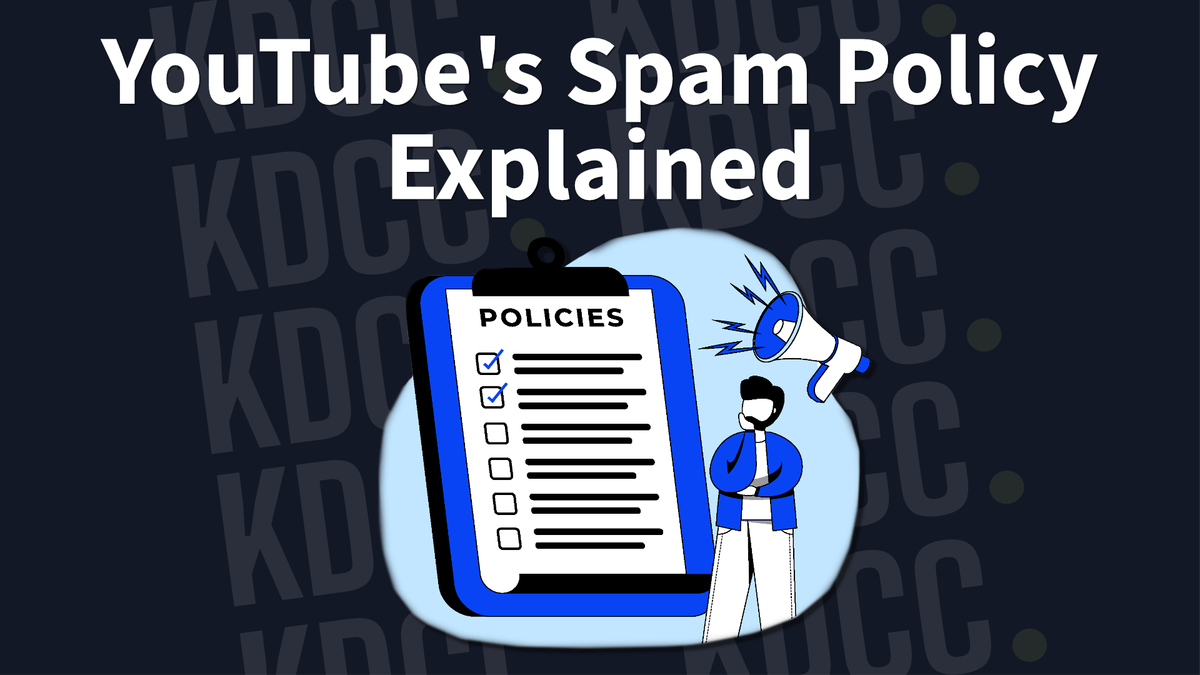
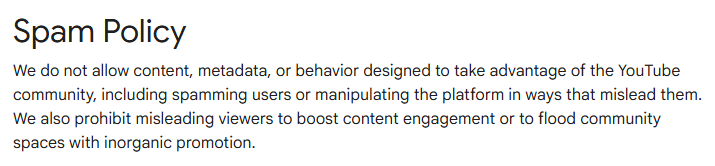
A lot of creators know about YouTube's Spam policy because of their updates to it, but not enough know what is exactly in the policy. So let's go over it.
Note that YouTube says this isn't the complete list.
Engagement manipulation.
If you engage in "sub-for-sub", "comment-for-comment", "like-for-like" and anything similar, this is considered engagement manipulation.
It's fine if you tell your viewers to like, comment, and subscribe. The problem stems from if you're going to reward or coerce them in exchange for those engagement.
This was a craze back in the late 2010s when creators would tell viewers to like the video if they want to see part 2 of a series immediately. There are still some creators who do it today, but not as much. It creates an inflation of numbers that might not be genuine, and YouTube doesn't want that.
Another part of engagement manipulation is using bots to inflate your numbers.
Fake engagement
If YouTube suspect you're exploiting the community features, like Polls or Image Posts, to force engagement, then this is considered fake engagement.
Community is meant to be a place to build genuine enthusiasm and (as the name says) a sense of community with your viewers.
Don't go posting low-effort, repetitive polls multiple times a day with simple "click the heart if you like food" phrases. It should be relevant to your channel and content, and a way to get your viewers to want to participate.
Comment spam
Channels aren't individual islands that you can hop around and skirt consequences if you've been caught spamming.
YouTube looks through hundreds of videos just to see whether you've been posting identical or similar messages to drive traffic to or engage with your content.
So if you go around saying, "check out my channel," YouTube considers that as comment spam.
Off-platform diversion
If you create content solely to drive people off of YouTube, and especially if it's to websites hosting malware, adult content, or illegal goods/services, this is against YouTube's Spam policy.
This doesn't mean you can't bring people into your off-side memberships like Patreon, Uscreen, or Fourthwall. Just as long as it isn't your only goal.
Detection evasion
For reaction creators, this might hit you the most. If you're using technical manipulation to bypass abuse detection... you're committing detection evasion.
This includes:
- Speeding up the footage
- Messing with the audio
- Adding a heavy filter on the footage
- Cropping the footage
For years creators have been doing this in order to avoid copyright claims and strikes... but most might not realize that they may not get in trouble with both copyrights and YouTube's policy.
Even if you think, "I've been doing this for a while and nothing's happened to me", it doesn't mean that it won't happen to you in the future. Remember to future-proof your content if you're planning on longevity.
Automated or synthetic mass-production
This is for all the AI-slop out there. If you're using automated tools or AI to post a bunch of similar content with minimal changes... you're violating YouTube's Spam policy.
While YouTube encourages you to try out their AI features, they don't want you to flood their platform with repetitive content. YouTube is trying their best to walk a fine-line between using AI and not wanting AI content.
Scraped content
Here's a part of the policy that aligns with YouTube's Shorts prioritization update. If you're a channel that takes popular clips and re-uploads them in their entirety without transforming it in any way, you're scraping content.
There are lots of channels that don't violate this policy by using a part of the video for them to respond and create a whole new video off of it.
If you don't provide anything that's uniquely yours, like original commentary, educational value, or distinctive editing, you're just stealing content.
Scams
Promoting "get rich quick" schemes, fake job offers, or sharing fake "customer support" contact information is against YouTube's policy.
The first part includes pump-and-dump schemes that a good chunk of popular creators often do.
There are loads of scammers on the internet and YouTube is no exception. Stay ever vigilant against any potential scams and report them to YouTube.
Malicious clickbait
If you upload a clip of a match, but advertise it as the full match in the title, that counts as malicious clickbait.
This includes any titles, thumbnails, descriptions, or imagery to trick viewers into clicking on a video that doesn't deliver what it promised.
Aim for clickworthy titles, instead of clickbait.
What happens if you violate YouTube's Spam policy?
Depending on the violation, it can suspend your monetization or even a channel termination. You could also have the content taken down and be struck with a strike.
If you get three strikes within 90 days, your channel will be subject to termination.
Remember that YouTube is dealing with millions of content and channels, and some might fall through the cracks. It doesn't mean that they're free to do whatever they want. They just haven't been caught yet.
Get monthly channel reviews and weekly live group coaching from Andrew Kan and Ike Do. First 7 days are free, cancel anytime.